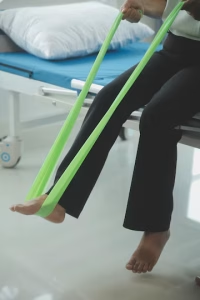
What Does Physiotherapy Treatment Do?
Physiotherapy (also known as physical therapy) is a powerful, evidence-based healthcare discipline. Whether you’re recovering from injury, managing chronic pain, or seeking better physical function, physiotherapy offers customized support. Let’s explore how physiotherapy treatment works, what it does, and why it matters.
Why Physiotherapy Matters: Setting the Stage
- Targeted healing versus passive wait-and-see
Rather than waiting for your body to “fix itself,” physiotherapy proactively guides recovery with tailored interventions. - Holistic approach
It addresses the whole person, mobility, strength, posture, movement patterns, pain, and lifestyle. - Wide applicability
From acute injuries to long-term conditions, physiotherapy supports people of all ages and fitness levels.
In this post, we’ll dive deep into what physiotherapy does, its goals, tools, benefits, and what your journey might look like.
1. Relieves Pain Naturally
One primary aim of physiotherapy is to reduce pain without relying solely on medication.
How?
- Manual therapy, techniques like joint mobilization, soft tissue massage, and myofascial release ease stiffness and relieve pain.
- Therapeutic modalities, tools such as heat, cold, ultrasound, or electrical stimulation support tissue healing and comfort.
- Exercise prescription, therapeutic movement corrects imbalances, strengthens weak areas, and reduces biomechanical stress.
Benefit:
You gain safe, sustainable pain relief while learning tools to manage discomfort long-term.
2. Restores Mobility & Flexibility
Stiff joints, tight muscles, or limited range of motion can hinder daily life; physiotherapy is designed to tackle just that.
Approaches include:
- Stretching routines, both passive (therapist-assisted) and active (self-driven).
- Joint mobilizations, gently guiding joints back into healthier movement patterns.
- Functional movement drills, practicing everyday motions (e.g., squatting, reaching) in ways that rebuild mobility with control.
Outcome:
You can move more freely and comfortably, whether you’re bending, walking, or performing daily tasks.
3. Builds Strength & Stability
Weak muscles or poor control can lead to injuries or ongoing dysfunction. Physiotherapy targets those gaps.
Components:
- Muscle conditioning, functional strength exercises tailored to your needs (e.g., rotator cuff strengthening, core stability, leg power).
- Neuromuscular re-education, improving how your brain and muscles coordinate to move efficiently.
- Balance and proprioception training, especially helpful after injuries like ankle sprains to prevent future roll-overs.
Result:
You gain resilience, better alignment, and reduced injury risk.
4. Enhances Posture & Alignment
Chronic poor posture often contributes to pain and dysfunction in neck, shoulders, or back.
Techniques:
- Postural assessments, identifying misalignments that create strain.
- Corrective exercises, strengthening posture-supporting muscles like the upper back and core.
- Movement retraining, learning to do daily tasks (e.g., sitting, standing, lifting) in posture-friendly ways.
Benefit:
You experience fewer aches from posture-based stress and age with better functional alignment.
5. Improves Coordination & Movement Quality
Even simple movements can become sloppy, putting you at risk of injury or inefficiency.
Therapy tools:
- Task-specific practice, repeating meaningful actions (e.g., stair climbing, reaching) with proper form.
- Motor control drills, breaking movement down into manageable bits and building them back up.
- Feedback mechanisms, using mirrors, verbal cues, tempo control, or tactile guidance to refine movement.
Outcome:
You move more confidently, efficiently, and safely across everyday and athletic activities.
6. Supports Recovery from Injury or Surgery
Physiotherapy is essential whether you’re recovering from an accident or a planned procedure.
Phases of care:
- Acute/inflammatory phase, focus on pain control, swelling reduction, gentle mobilization.
- Subacute/repair phase, gradually re-load tissues with safe stiffness reduction and movement improvements.
- Rehab/functional restoration phase, rebuilding strength, endurance, balance, and return to activity.
Endgame:
A controlled, progressive return that protects healing tissues while building movement capacity.
7. Offers Personalized Education & Self-Management
Physio is not “physician only”, it’s about empowering you.
What you learn:
- Understanding your condition, why a particular structure hurts, what triggers flare-ups, and what helps.
- Home exercises, tailored routines you can practice independently.
- Posture & movement tips, everyday habits (like how to lift a grocery bag) that reduce strain.
- Preventive strategies, from ergonomic tweaks to warm-up habits before activity.
Why this matters:
Knowledge keeps your better movement sustainable for life.
8. Addresses Chronic Health Conditions
Physiotherapy isn’t only for injuries, it plays a huge role in managing long-term conditions.
Conditions helped include:
- Arthritis, maintains joint mobility and function.
- Post-stroke rehabilitation, retrains movement, strength, and balance.
- Cardiopulmonary support, improving function for those with heart or lung disease.
- Neuromuscular disorders, managing symptoms and optimizing movement for conditions like Parkinson’s or MS.
Advantage:
Better quality of life and improved function despite chronic challenges.
9. Enhances Performance (Everyday & Athletic)
Many physiotherapy programs double as performance-enhancers for athletes, or anyone wanting better function.
Performance benefits:
- Movement optimization, smoother mechanics mean more efficient running, lifting, or daily tasks.
- Injury prevention, identifying and correcting weak links before they sideline you.
- Functional progression, tailored exercises that support your goals (e.g., lifting more, running farther).
Impact:
Stronger, faster, more resilient performance, whether on the field or in life.
10. Boosts Well-Being, Confidence & Motivation
Physiotherapy isn’t just physical, it also supports your mental journey.
Wellness perks include:
- Empowerment, as you understand and take control of your body, confidence grows.
- Emotional support, the therapeutic relationship and accountability help with adherence and morale.
- Positive momentum, small improvements build into meaningful change and a sense of forward motion.
Why it matters:
A happier, healthier you with renewed energy to stay active and engaged.
What to Expect: Your Typical Physiotherapy Session
| Phase | What Happens |
| 1. Assessment | Analysis of your history, movement patterns, pain triggers, and goals. |
| 2. Treatment Plan | A structured plan: manual therapy, exercises, modalities, education. |
| 3. Active Work | Performing exercises with guidance; adjusting form, load, and complexity. |
| 4. Education | Learning techniques you can use daily, breathing, posture, pain management. |
| 5. Monitoring | Ongoing evaluation and adaptation as you progress through stages. |
Each appointment builds on the last, steadily guiding you back to optimal function.
Who Benefits from Physiotherapy?
Here’s a quick look at who sees results:
- Acute injury patients, sprains, strains, post-surgery healing.
- Chronic condition sufferers, osteoarthritis, back pain, repetitive stress.
- People with neurological or cardiopulmonary needs.
- Athletes & performance-focused individuals, to fine-tune movement & prevent injury.
- Anyone seeking better mobility, strength, or pain-free life.
Tips for Maximizing Your Physiotherapy Outcomes
- Stay consistent, healing thrives on regular effort, whether in sessions or at home.
- Communicate honestly, share your goals, pain levels, and feedback openly.
- Embrace active ownership, the more you apply what you learn, the better results.
- Be patient with progress, not all gains are fast, but small gains add up.
- Follow through on at-home recommendations, your therapist’s instructions are key extensions of your care.
Your Health Support Starts with Movewell Clinic
At Movewell Clinic, we believe every patient deserves personalized, evidence-based care. Our skilled physiotherapists are committed to helping you recover, strengthen, and move with confidence.
Whether you are rehabilitating after an injury, addressing chronic pain, or working on mobility improvements, our team is ready to support your goals. If you’re in British Columbia and looking for professional guidance, reach out to us at info@movewellclinic.ca to start your journey toward better movement and better health.